“We love death as you love life.” This mantra sounds from the ranks of Hamas, ISIS, Palestinian Islamic Jihad, al-Qaeda, Boko Haram and many other Muslim radical groups.
As far as I can tell, the boast seems traceable back to the time of Caliph ‘Umar, who in 636 AD ordered his commander Sa’d, when facing a general from the infidel Sassanid (Persian) Empire, to invite the Persians to submit to Islam with the warning, “If you don’t [convert to Islam], you should know that I have come to you with an army of men that love death, as you love life.” (The whole story of the Battle of Qadisiyya is told in lurid and fanciful detail by the Muslim historian Tabari in volume twelve of his massive History of the Prophets and Kings.)
It has been echoed in modern times by Osama bin Laden, who wrote in his fatwa, Declaration of War Against the Americans Occupying the Land of the Two Holy Places, “These youths [his jihadi trainees] love death as you love life.” And again, “Our youth are different from your soldiers. Your problem will be how to convince your troops to fight, while our problem will be how to restrain our youth to wait for their turn in fighting and in operations.” Why? Because these soldiers of Islam “…have no intention but to enter Paradise by killing you.”
Bin Laden did not come up with this idea out of thin air. The Qur’an and Islamic traditions are full of the alluring promises of Paradise for those who are martyred while pursuing violent jihad against the infidel world. In 9.111 of the Qur’an, Allah strikes a bargain with Muslims:
“Indeed, Allah has purchased from the believers their lives and their properties [in exchange] for that they will have Paradise. They fight in the cause of Allah, so they kill and are killed. [It is] a true promise [binding] upon Him in the Torah and the Gospel and the Qur’an. And who is truer to his covenant than Allah? So rejoice in your transaction which you have contracted. And it is that which is the great attainment.”
An illuminating account in the Hadith traditions (told multiple times in numerous locations) shows Muhammad stirring his warriors to battle by promising them immediate gratification in Paradise should they be slain in carrying out “jihad in the way of Allah.”
“Yahya related to me from Malik from Yahya ibn Said that the Messenger of Allah, may Allah bless him and grant him peace, stimulated people for jihad [emphasis mine] and mentioned the Garden. One of the Ansar [a Muslim from Medina] was eating some dates in his hand, and said, ‘Am I so desirous of this world that I should sit until I finish them?” He threw aside what was in his hand and took his sword, and fought until he was slain’” (Muwatta Malik, 21.42).
This Islamic fixation on martyrdom has not been lost on Palestinian leadership, which since the 1960s had established a “martyrs’ fund” to reward families of those Palestinians who died in the attempt to kill Israelis. As international financial support increased to the Palestinian Authority through the UN and direct foreign aid, the scope and magnitude of payments increased, not only covering families with monthly lifetime stipends but also to Palestinians arrested and imprisoned while fighting or resisting Israeli forces.
Today, of the roughly $600 million budgeted by the Palestinian Authority for “welfare”, about 60% goes to martyr and prisoner support, and the rest to care for its people in need. It has been dubbed “Pay for Slay,” and certainly seems geared toward rewarding those who engage in violence against Israelis. Indeed, its pay scale is linked to bloodshed: the deadlier the attack, the more lucrative the reward. Families of martyrs as of 2023 receive a one-time grant of $1500 and then a $1400/mo. stipend for life. Those incarcerated in Israeli prisons are promised monthly “salaries” for life, determined by the length of their sentences. Those serving less than three years receive $400 per month. A sentence of up to five years results in a $570 monthly income. Those incarcerated for up to ten years garner a salary of $1142. Any serving thirty or more years rake in $3429 each month. This does not include occasional extra grants provided by the PA or its ancillary arms.
Prior to the October 7th Hamas attacks on Israel, the Pay for Slay program distributed over $300 million annually to those having engaged in violence against Israel. After the massacre, the Palestinian Authority, ruling over the West Bank (not Gaza) announced that all those killed or captured by Israel in response to the Hamas carnage would be covered by its largesse under Pay for Slay. Over the last three months, that has added roughly $2.8 million in additional payments which will continue for decades.
Of course, in the minds of Muslim Palestinians, these recipients are not viewed as terrorists and criminals, but as freedom-fighters and martyrs in Allah’s cause. They are lionized. Their mothers burst with pride over their sacrifices and the heavenly rewards they are now reaping. Impassioned parades are conducted in their hometowns. Streets are renamed after these martyrs. Sermons are preached at the Friday noon mosque services exalting them, declaring how Allah honors them, and exhorting listeners to follow in their footsteps. Smug Muslim media commentators wax eloquent over how the Muslim world will eradicate Israel from the face of the earth because “We love death more than you [Israelis] love life!”
Given the fact that the majority of young Palestinian men live in rather sordid circumstances with little chance of attaining the dreams regularly entertained by their peers in Western culture, the fantasy of dying as a martyr and entering a paradise filled with a harem of 72 comely virgins reserved just for his sexual delight, surrounded by tables filled with gastronomic delights and rivers flowing with pure water, milk, honey and wine, lounging on soft beds of moss while shaded by beautiful trees under mild sunshine, with young boys at his beck and call as gofers, is tantalizing.
It’s no surprise that Islam, in the eyes of many Muslims as well as infidels, functions as a “martyrdom cult.” There is no doubt that its authoritative writings portray Muhammad as the mouthpiece of Allah who “stimulated people for jihad,” who taught that in Allah’s eyes there was no act that equals jihad in honor and value, and who promised that unlike the average human being had no assurance of Allah’s mercy, those who “killed and were killed” for the cause of Allah were guaranteed the key to Paradise immediately upon death.
This mindset will continue to fuel the Arab-Israeli conflict, as well as the larger jihad wars against all infidels, until the end of time, or until Islam succeeds in its plan of world conquest, unless somehow the Muslim world decides to reform its understanding of jihad as warfare against all who stand in the way of its supremacist goals. This would demand a fundamental reworking of its core theology, as well as a jettisoning of scores of passages in the Qur’an and even more in the Hadith that command warfare. It would also require a total overhaul of the portrayal of Muhammad, the Warrior-Prophet, whose martial success over the infidel world is a matter of great honor and reverence.
Could it happen? Perhaps. But not without gutting the heart of Islam and remaking it into something that Muhammad (and Allah) never intended. The majority of Muslims will never stand for that.
On October 7th, Hamas seared its way into the consciousness of much of the world ignorant of its existence. With its sudden invasion of Israel and slaughter of over 1200 Israelis, mostly unarmed families and innocent victims, Hamas solidified its status as one of the world’s vilest terrorist organizations (if such a distinction is even possible).
Hamas is an Arabic acronym standing for the phrase “Islamic Resistance Movement”. Palestinian Imam Ahmed Yassin founded it in the Palestinian Territories in December, 1987, as a political wing of the radical Egyptian Muslim Brotherhood, hoping to bring some vision and cohesion to the resistance of his people against Israel. Contrary to the Palestinian Liberation Organization (PLO) under Yasser Arafat, it was not willing to recognize the legitimacy of Israel nor, as a result, a “two-state solution” to the Palestine-Israel conflict. Its reasoning is firmly based in orthodox Islamic theology, as reflected in its founding charter, published in August, 1988, and entitled: “The Charter of Allah: The Platform of the Islamic Resistance Movement”.
Hamas sees its calling to be the rightful and necessary response that all Muslims should make to the commands of God in the Quran for the obliteration of Jews from the face of the earth. Why? Because they are the enemies of God, worse than all other peoples. The very first lines of the charter boast that Muslims are the best of all nations, and that they will ultimately destroy Israel:
“‘In the Name of Allah, the Merciful, the Compassionate. Ye are the best community that has been raised up for mankind. Ye enjoin right conduct and forbid indecency; and ye believe in Allah….’ (Sura 3:109f). Israel will rise and will remain erect until Islam eliminates it as it had eliminated its predecessors…” (my emphasis).
The following introductory paragraph brazenly asserts:
“For our struggle against the Jews is extremely wide-ranging and grave, so much so that it will need all the loyal efforts we can wield, to be followed by further steps and reinforced by successive battalions from the multifarious Arab and Islamic world, until the enemies are defeated and Allah’s victory prevails.”
Lest you think that Hamas is just exploiting an innocent religion to advance its own hateful agenda, the charter quotes the Quran again and again to substantiate its vision, and claims that its position is based wholly on the teachings of Islam. Article 1 states:
“The Islamic Resistance Movement draws its guidelines from Islam; derives from it its thinking, interpretations and views about existence, life and humanity; refers back to it for its conduct; and is inspired by it in whatever step it takes.”
Hamas defines its constituency as “…Muslims who are devoted to Allah and worship Him verily…” (Article 3), and welcomes to its ranks all Muslims who are equally committed (Article 4).
The religious vision of the Quran as held by traditional, orthodox Islam is the “be-all and end-all” of Hamas, according to Article 5:
“Its ultimate goal is Islam, the Prophet its model, the Qur’an its Constitution. Its special dimension extends wherever on earth there are Muslims, who adopt Islam as their way of life; thus, it penetrates to the deepest reaches of the land and to the highest spheres of Heavens.”
The creed of Hamas (copied from the Muslim Brotherhood) is written in Article 8: “Allah is its goal, the Prophet its model, the Qur’an its Constitution, Jihad its path and death for the cause of Allah its most sublime belief.”
In line with traditional Muslim understandings, Hamas claims that the land of Palestine is an Islamic Waqf (similar to the Pharisaic term Corban, to which Jesus referred in Mark 7:11-12). Literally meaning “detention,” Waqf refers to a land that is now irrevocably devoted to Allah, which may never be taken back from Islamic control. Hence the nation of Israel has terribly transgressed the will of God by seizing from Allah what it has no right to possess. In the name of Islam, Hamas commits itself to setting right this wrong. Palestine, and all other lands heretofore conquered by Islam for Allah, are to be managed by Muslims for the benefit of Allah. The existence of Israel is an abrasive offense against Islamic sensibilities (see Article 11).
The Charter of Hamas denies the possibility of any peaceful solution with Israel, citing religious grounds. Article 13 states unequivocally:
“[Peace] initiatives, the so-called peaceful solutions, and the international conferences to resolve the Palestinian problem, are all contrary to the beliefs of the Islamic Resistance Movement. For renouncing any part of Palestine means renouncing part of the religion…. Those conferences are no more than a means to appoint the nonbelievers as arbitrators in the lands of Islam. Since when did the Unbelievers do justice to the Believers? [This is followed by a Quranic quotation – 2:120.] ….There is no solution to the Palestinian problem except by Jihad. The initiatives, proposals and International Conferences are but a waste of time, an exercise in futility” [my emphasis].
Not only is Palestine a Waqf – one of many lands conquered by Islam and so treasured by Allah – it bears a special religious significance since it was the place of the first Qibla (the direction Muslims were to face when praying, till Allah changed his mind and commanded them through Muhammad to face Mecca instead), and the place where, according to tradition, Muhammad ascended to heaven on a short, sight-seeing journey from Jerusalem at the location commemorated by Islam’s third holiest shrine (al-Aqsa Mosque). Thus, it is incumbent on all Muslims, says Hamas, to answer the call to jihad individually and as a nation. This view is articulated in Article 14 and summed up at the start of Article 15 with these words:
“When our enemies usurp some Islamic lands, Jihad becomes a duty binding on all Muslims. In order to face the usurpation of Palestine by the Jews, we have no escape from raising the banner of Jihad.”
Article 15 ends with the quotation of a tradition (attributed to both Bukhari and Muslim, but which I could not locate) saying, “I swear by that One who holds in His Hands the Soul of Muhammad! I indeed wish to go to war for the sake of Allah! I will assault and kill, assault and kill, assault and kill (told by Bukhari and Muslim).” This is meant to drive home the rightness and blessedness of participating in jihad against Israel, because the Jewish squatters on the land of Palestine are a religious problem, which demands a religious solution – the jihad of armed conquest.
Not only boys and men, but women and girls must participate in this all-encompassing work of jihad, according to Article 17:
“The Muslim women have a no lesser role than that of men in the war of liberation; they manufacture men and play a great role in guiding and educating the [new] generation.”
How interesting to see the value of women defined in functional terms: they “manufacture men” (i.e., have babies who will become jihadists one day), and they “educate” children to understand their future roles as Muslim adults pursuing the advancement of Islam.
But the hatred of Hamas is not limited to Jews living in Israel. The Qur’an emphasizes that of all the enemies of Allah and Muhammad, the Jews are the worst. Allah has cursed them because of their unbelief (2.88; 9.30), their treatment of the prophets (4.154), and their mishandling of scripture (5.19); they are by and large treacherous and untrustworthy (5.13); in the past, Allah transformed some of their ancestors into apes and pigs as punishment for their infidelity (5.60); they eagerly listen to lies and distort the truth (5.41); they mock Allah and claim they are rich, practicing usury and yet greedy for still more gain (3.181; 4.161 ); they are among those most hostile to Muslims (5.85); together with Christians and idolaters, they are “the worst of creatures” (98.6).
Add to this the anti-Semitic tropes abounding in Muslim tradition, and it’s not hard to understand why many Muslims concoct and believe conspiracy theories proclaiming that the Jews are behind all the evils in the world. The Hamas Charter confirms this mindset in Articles 22 and 28. Hence it is the God-given duty of every Muslim to eliminate the Jews from humanity, and Hamas wants to lead that charge.
So much more corroborating evidence could be culled from the 36 Articles of the “Charter of Allah” to demonstrate that the mindset of the Quran and those who believe it (as the early Muslim world did) is one of clear black and white, painting all the non-Muslim world as enemies of Islam (even fellow Muslims are expendable, should their death aid the cause), but reserving special enmity and spite for the Jews (and all Zionist partners). As a final witness, let me share the charter’s quotation of one more authentic Hadith tradition.
Article 7 declares that Hamas is looking forward to the promise which Allah made through Muhammad concerning the destruction of the Jews:
“The prophet, prayer and peace be upon him, said: The time will not come until Muslims will fight the Jews (and kill them); until the Jews hide behind rocks and trees, which will cry: O Muslim! There is a Jew hiding behind me, come on and kill him! This will not apply to the Gharqad, which is a Jewish tree (cited by Bukhari and Muslim).”
The names in parentheses refer to the two most highly revered collectors of Hadith traditions in all of Islam, and this account is found in seven varied iterations, indicating that it is not a one-time anomaly. Hence, the orthodox Muslim perspective is that Allah will finally punish and exterminate Jews for their despicable rebellion against him, using Muslims as the instrument of his wrath. Their presence as a blight on humanity will finally be effaced by jihadists. Hamas openly and eagerly awaits the fulfillment of this promise.
So now you know something of the movement of Hamas, and why they hate the Jews. Unfortunately, this hatred has the sanction of Islam, and so these Sunni Muslims believe with the fervor of the devout that they are pleasing Allah by seeking the death and humiliation of the Jews.
But why kill non-combatants – Jewish women, children, babies, and the elderly — as happened on October 7th? And why butcher them with excessive brutality and savagery? The answer to the first question is simple: they are Jews, and so enemies of Allah; none of them is innocent. They are unjust occupiers of land belonging to Allah and the Muslims, and so are guilty of stealing Allah’s blessings from the rightful occupants. And, of course, they are easier and faster to slaughter than soldiers.
The answer to the second question has to do with the Islamic call to inflict terror on the enemy. Four times in the Qur’an, Allah claims responsibility for casting terror into the hearts of his enemies so that the Muslims could easily conquer them (3.15; 33.26; 59.2; 8.12; 8.59). In 8.12 in particular, Allah instructs his armies how to prosecute their orders:
[Remember] when your Lord inspired to the angels, “I am with you, so strengthen those who have believed. I will cast terror into the hearts of those who disbelieved, so strike [them] upon the necks and strike from them every fingertip.”
Lastly, in 8.59, it is not Allah directly who casts terror into infidel hearts but Muslims as they carry out Allah’s will:
Against them make ready your strength to the utmost of your power, including steeds of war, to strike terror into (the hearts of) the enemies of Allah and your enemies, and others besides, whom ye may not know, but whom Allah doth know. Whatever ye shall spend in the cause of Allah, shall be repaid unto you, and ye shall not be treated unjustly.
Allah promises that by showing such savagery, his followers will terrify not only those standing in front of them but also those unbelievers who hear of what the Muslims have wreaked on fellow non-Muslims. Such terror will incline them not to fight but rather to submit to Islam. This is the Islamic justification behind the use of beheadings and other atrocities in warfare. Terror on the battlefield is mandated by Allah against his enemies.
When Benjamin Netanyahu said a few days ago, “Hamas is ISIS,” he was asserting that Hamas believes in the same Islamic narrative at ISIS. They are operating from the same playbook – that of orthodox Sunni Islam in its orientation toward the enemies of Allah. Those who resist the advance of Islam are to be terrorized and destroyed. Many Muslims today might recoil at this thought, but in doing so, they are not following the Islam of Muhammad, they are hiding from its unpalatable commands.
When NSC spokesman John Kirby was asked by MSNBC reporter Ari Melber how he understood the comparison between Hamas and ISIS, he said “it was more related to the tactics, the sheer, brutal, visceral violence that were visited upon so many hundreds of Israeli citizens. It is reminiscent of what ISIS had proven willing to do.” He noted somewhat correctly the distinction that the goal of ISIS was a worldwide caliphate while Hamas “just wanna kill, they wanna maim, they wanna torture, they wanna wipe Israel off the face of the map.” Summing up, Kirby said, “The comparison is about the utter depravity and brutality of it.”
But the comparison goes much deeper than tactics. Tactics rest on strategy, and the strategy that both ISIS and Hamas share comes from the teachings and example of their revered prophet Muhammad. Most politicians are either ignorant of this or unwilling to share the truth, because they know that the truth will force the United States to face the fact that the Islam proclaimed by the Qur’an and inspired Hadith traditions is antithetical to Western civilization, and to oppose its advance will require serious backbone and resources.
Lastly, to the question of why Hamas decided to attack now, I have my own opinions. Hamas has not stated their reasons, but here’s some food for thought. The terrorist leaders acknowledged that their surprise attack had been in planning and preparation stages for well over a year, and that they had met with fellow terrorist groups and members of the Iranian Revolutionary Guard Corps in Beirut to streamline their plans. Despite the claims by Iran that they had nothing to do with the October 7 massacre, one would be a fool to believe them.
Neither Hamas nor Hezbollah would exist in their present form without the steady help of the nation of Iran, financially, militarily and strategically. Over the last 25 years, Hamas alone has received several billion dollars in aid from Iran. That money, along with similar amounts from the UN, Qatar and Western countries, has not gone for the benefit of the people of Gaza, to build their infrastructure, invest in jobs and tourism, create a social safety net for the impoverished. No, instead it has gone to create a military arsenal, to develop armament factories, to train terrorists, to build hundreds of miles of tunnels underground (from depths of 60 to 110 feet below the surface), to hide listening posts, caches of weapons, and other military technologies under schools, hospitals and mosques in the midst of civilian neighborhoods, hoping such “shields” will prevent Israel from degrading their military assets.
October 7, 2023 marked fifty years from the onset of the 1973 Yom Kippur war. That war actually began on October 6th, but this year that would have been on a Friday, when Israel was at normal operational strength. October 7th was a Sabbath day, and a special religious holiday as well for the Jews. As such, it might be easier to catch them off their guard, so they delayed their plans for one day.
Secondly, and more importantly, the theocratic government of Iran is teetering on the brink of collapse as they battle a popular national uprising, economic bankruptcy, the moral condemnation of international bodies for their unjust arrests and executions of political opponents, as well as their state sponsorship of terrorism in Iraq, Syria, Lebanon, Gaza and Yemen. The number one goal of Ayatollah Khamenei, now that he and his cronies have failed to deliver on the promise of a Shi’ite utopia for Iran, is to see that Israel is destroyed before his own ship goes down. Having armed Hamas and Hezbollah to the teeth with precision-guided missiles and other military equipment, and having placed troops and munitions in Syria under the guise of helping stabilize the government of Bashar al-Assaad, and having developed long-range ballistic missiles of their own in Iran, Khamenei may have now given the go-ahead to Hamas to begin its attack in the west, to be followed in short order by tens of thousands of missiles fired by Hezbollah from the north and northeast, with the help of IRGC troops in Syria, at the same time encouraging Palestinians in the West Bank to create havoc for Israel by their own uprising, and finally, when Israel is embattled and exhausted, unleashing their own formidable ballistic missile arsenal at Israel.
This, Khamenei knows, will unleash a conflagration which will engulf the whole region, and maybe the rest of the world, and perhaps he is counting on that, for in some sects of Shi’ite Islamic thought the Savior of the Islamic world, the awaited hidden imam, will finally appear and lead the Muslim world to victory over the rest of the human race only when the world is engulfed in war and turmoil. It may be that he wants to see the eradication of Israel and the return of the Mahdi before his own eyes close in death. Since everything else he has worked his whole life for is showing signs of imminent collapse, I wouldn’t put it past him.
Certainly the chants, “Death to Israel”, continue every Friday in the mosques and public squares as fomented by clerics and government officials in Iran. Hatred for the Jews is not limited to Hamas, nor to Shi’ite Islam. It is well past time that this Islamic-inspired hatred is revealed to the whole world, and Islam is held to account.
This last February 28th, the Dalai Lama was interacting with visitors at a public event in the temple which bears his name, found in Dharmashala, northern India, the town of his permanent exile from Tibet. Known as “His Holiness,” this 87-year-old monk is the leader of the Yellow Hat sect of Tibetan Buddhism and a recipient of the Nobel Peace Prize, and has become famous around the world for his gentle spirituality.
During this particular event, a young boy approached the Dalai Lama and asked if he could give him a hug. “His Holiness” invited the boy up on stage as the event was being filmed and pointed to his cheek, saying “First here,” indicating the boy was to kiss him. Continuing his interaction, the monk then pointed to his lips and said, “Then I think finally here also,” lifting the boy’s chin with his hand and placing a kiss on the boy’s lips. After a few seconds with their faces close together, the Dalai Lama sticks out his tongue and commands the child, “And suck my tongue.”
The video of this has gone viral on social media, with many decrying the religious leader’s behavior as “horrible,” “disgusting,” “pedophilic,” “child abuse,” “sexual exploitation of a minor,” and so on.
As blowback has increased significantly since the incident occurred, the office of the Dalai Lama issued an apology of sorts, saying that actions of “His Holiness” were misunderstood, that he often jokes with people in innocent ways, and that he is sorry to the boy and his family for any hurt his words may have caused. Indeed, he regrets what happened.
Of course, this regret and apology came some six weeks after the incident itself, and were apparently prompted by the severe negative publicity generated due to the viral video. Yet, the Dalai Lama’s supporters were quick to provide cover for their leader, pointing out that it is an old Tibetan custom, going back to the 9th C., for Tibetans to stick out the tongues when greeting one another. That may indeed be the case – I am no expert or judge on Tibetan customs – but greeting another with a protruding tongue is one thing; commanding the one being greeted to suck the other’s tongue an altogether different matter. On top of that, we see the power imbalance of a revered adult using his unchallengeable authority to manipulate a powerless child. These are not the actions of an innocent, responsible adult, no matter what his sycophants might say. The actions of “His Holiness” in this matter are decidedly unholy, and he should be held to account.
But the Dalai Lama is not the only major religious leader in the tongue-sucking business. As soon as I read of this story, my mind immediately went to early Islamic sources which portray Muhammad as one who sucked the tongues of little boys and invited them to suck his tongue as well.
Muhammad al-Bukhari is famous among Sunnis for his collection of Hadiths concerning the life and teachings of Islam’s prophet. It is the most revered of the Sahih Sittah, the six hadith collections considered authoritative by Sunnis. In addition to his major word, Bukhari collected another set of reports, entitled al-Adab al-Mufrad. Entry 1183 reads:
It is related that Abu Hurayra said, “I never see al-Hasan [Muhammad’s first grandson] without my eyes overflowing with tears. That is because the Prophet, may Allah bless him and grant him peace, went out one day and he found me in the mosque. He took my hand and I went along with him. He did not speak to me until we reached the market of Banu Qaynuqa’. He walked around it and looked. Then he left and I left with him until we reached the mosque. He sat down and wrapped himself in his garment. Then he said, ‘Where is the little one? Call the little one to me.’ Hasan came running and jumped into his lap. Then he put his hand in his beard. Then the Prophet, may Allah bless him and grant him peace, opened his mouth and put his mouth in his mouth. Then he said, ‘O Allah, I love him, so love him and the one who loves him!’” (italics mine).
The Arabic of the italicized portion reads more literally “opened his mouth and entered his mouth into his mouth.” What makes most sense of this language is that the prophet inserted his tongue into the mouth of his young grandson. Muhammad ostensibly saw this as an act of love, as repulsive as that might seem to the average reader of any age (except for perhaps His Holiness the Dalai Lama). What other purpose could the Islamic prophet have in mind than for his grandson to suck his tongue after putting it in Hasan’s mouth?
But another hadith pictures Muhammad not only as enjoying having his tongue sucked; he also enjoyed sucking the tongues and lips of others. According to Musnad Ahmad 16245, one of Muhammad’s companions, Mu’awiya, reported:
I saw the prophet sucking on the tongue or the lips of Al-Hassan son of Ali [same grandson as above], may the prayers of Allah be upon him. For no tongue or lips that the prophet sucked on will be tormented (by hell fire).
This account leaves no doubt that Muslim tradition portrays Islam’s prophet as engaging in what today would be called child abuse or sexual harassment of a minor. Imagine if a video camera had captured what Mu’awiya testified that he had seen, and it had gone viral on the Internet, as surely it would. The same cries of moral revulsion and more would be aimed at Muhammad, for his behavior grossly exceeded the actions of the Dalai Lama. Public opinion of the Buddhist monk was filled with statements like: “sick old man;” “sexual assault of a minor;” “pedophilic actions;” “classic child grooming;” “perverted;” “menace to children;” “disgusting.” What would the unbiased viewer of the hypothetical video of Muhammad’s tongue-work with his young grandson conclude concerning the man Islam calls “the perfect human”, the man all humans are to emulate to their best ability?
One Twitter commenter, after seeing the footage concerning the Dalai Lama and his young admirer, wrote:
We’ve seen the video and we’re not buying any of it, sorry. If that was a “hug” then I’m a Leprechaun. I don’t think “His Holiness” is a title you can use any more either.
Another, who professed to have held the Buddhist leader in high esteem, confessed:
It’s not innocent or playful and it wasn’t a hug. It’s child abuse. You were one of the few leaders I trusted. Never again. My heart hurts.
Will Muslims flee the fold of Islam upon discovering that their revered prophet is portrayed in their own trusted sources as committing indecencies even worse than those of the Dalai Lama? Unfortunately, the answer is probably not. Human beings are capable of twisting reality into pretzels in order to continue to defend the indefensible, and to coddle our convictions despite hard, unrelenting truths.
Concerning these hadiths about Muhammad, his followers might say that, though unusual, these two accounts point only to the deep love the prophet had for his grandson. His behaviors with Hasan were intimate but innocent. Others will have to judge for themselves whether it is upright behavior for a grandfather to engage in what amounts to French kissing with his young grandson.
However, this was not a one-time behavior, nor was it limited to one person, according to Musnad Ahmad. We are given this theological justification for the prophet’s behavior: “For no tongue or lips that the prophet sucked on will be tormented (by hell fire).” So, if you are fortunate enough to have the prophet suck your tongue or lick your lips, you are guaranteed paradise! We don’t know how long the list is of those saved from hellfire by swapping spit with the Perfect Human, but one can hope that it was mercifully short.
Other Muslims have found creative, even sublime arguments to justify Muhammad’s reprehensible behavior. Remember, we are told, Muhammad and his followers lived in a hot, arid land. It was a common practice for parents, when their children were in the agony of thirst and there was no water to be found, to allow their children to suck on their tongues as a means to calm them down and ease their thirst. No contemporaneous evidence is supplied to support this claim. Should it have ever been the case, however, it would apply principally to infants. Muhammad’s generosities with his tongue were apparently not limited to infants.
Yet, thirst among the Muslims should not be a consideration, for according many Muslim accounts, Muhammad performed a grand assortment of miracles for his followers, providing them water in their times of need. Out of roughly ninety miracle narrations, this one is my favorite, found in Bukhari (4.56.776):
Narrated Salim bin Abi Aj-Jad: Jabir bin ‘Abdullah said. “The people became very thirsty on the day of Al-Hudaibiya (Treaty). A small pot containing some water was in front of the Prophet and when he had finished the ablution the people rushed towards him. He asked. ‘What is wrong with you?’ They replied. ‘We have no water either for performing ablution or for drinking except what is present in front of you.’ So he placed his hand in that pot and the water started flowing among his fingers like springs. We all drank and performed ablution (from it).” I asked Jabir. “How many were you?” he replied. “Even if we had been one-hundred-thousand it would have been sufficient for us but we were fifteen-hundred.”
When it comes to generating water, ten fingers beat one tongue every time. If Hassan, or any other believer, was desperately thirsty, the prophet could simply have streamed water from his fingers so they might drink to their hearts’ content. Thirst was apparently not the issue behind this tongue-in-mouth behavior.
Even harder to explain, on the thirst hypothesis, is why Muhammad would have been sucking the tongues and lips of others. Was he so dehydrated that he needed to extract fluids from others? Could he not have opened the spigots of his fingers to quench the burning in his throat. This “thirst theory” would turn Muhammad into a “water vampire” of sorts, preying on others to gather refreshment for himself. Certainly this is not the image Muslim defenders of Muhammad would like to paint before the world of their “excellent example” of human nature.
If common sense leads people from all walks of life to censure the Dalai Lama for proposing something reprehensible to an innocent child, shouldn’t that same common sense lead observers to censure Islam’s founder for his execrable behavior in this regard, and to seriously question Islam’s claim that Muhammad is the trustworthy divine messenger, whose every word is to be believed and whose every action is to be emulated.
I pray Muslims will wake up to their own “reliable” source materials, where their prophet ordered assassinations, parceled out sex slaves to his soldiers from captured girls, nursed grudges against those who laughed off his religious claims, kept slaves and concubines for his own pleasure, poisoned the minds and hearts of his followers against Jews and Christians, and deflowered his youngest of fourteen wives when she was just nine years old. May they read their own authoritative texts and thereby conclude concerning Muhammad and Islam, “He was the one leader I trusted. Never again. My heart hurts.”
There is one whom billions have found worthy of their trust and devotion. However, he is not found in Islam. One must look to the Book, to which the Qur’an alludes but which it never understands. May Muslims find the One about whom Moses and the prophets spoke, whose victory over sin and death many around the world have just celebrated! He alone is trustworthy and true.
Exactly two months ago, on September 11th, President Joe Biden stood in front of a gathering at the Pentagon to deliver a fifteen minute speech during the 21st annual memorial service honoring those killed in cold blood by Muslim terrorists.
He acknowledged the 2977 “precious lives stolen from us” on that “terrible day” when “Terror struck us on that brilliant blue morning.”
He referred to that day as “the open shot of a new war,” and vowed that “we will follow them to the gates of hell to be sure they’re not able to continue.” He boasted that it is “…the enduring resolve of the American people to defend ourselves against those who seek [sic] us harm, and to deliver justice to those responsible for attacks against our people,” and pledged that “…our commitment to preventing another attack on the United States is without end.”
In all of his 1825 recorded words as found on the whitehouse.gov website, Mr. Biden mentioned the words terror, terrorism or terrorists a total of 8 times. This seems rather odd, especially given the President’s rallying cry about half-way through his remarks: “Because we will not rest. We’ll never forget. We’ll never give up.”
Incredibly, he never mentioned Islam throughout his speech, nor did he modify the terror, terrorism or terrorists with the adjective Muslim or Islamic. I’m curious how he intends to identify the terrorists that we will follow to the gates of hell. Who are the subversives that we are resolved to defend ourselves against, the murderers to whom we will deliver justice? To what kind of justice are we committed — the justice which holds terrorists for decades in rather comfortable accommodations at Guantanamo, and then releases them to Muslim governments for “rehabilitation”?
But these are rather minor quibbles compared with what troubles me most about Mr. Biden’s speech. While waxing eloquent (as much as his speechwriters could help him), the President noted that in our dark moment of 9/11 and its aftermath, “we regained the light by reaching out to one another and finding something all too rare — a true sense of national unity.” (Would that he valued that all too rare commodity today in his haste to demonize opponents — but I digress.)
It is at this point in his speech that Mr. Biden reveals his greatest takeaway from the 9/11 terrorist attack. I will quote him in full lest anyone accuse me of cherry-picking his words:
“To me, that’s the greatest lesson of September 11. Not that we will never again face a setback, but that in a moment of great unity we also had to face down the worst impulses, fear, violence, recrimination directed against Muslim Americans, as well as Americans of Middle Eastern and South Asian heritage.”
Here is the lone place where the President mentions Muslims. Apparently in his mind, the main lesson of the worst terrorist attack on American soil is that we must be wary of “Islamophobia”, in spite of the fact that American citizens were remarkably restrained in the days, weeks and months following this great evil perpetrated by self-described Muslims in the name of Islam. Certainly all sane people will agree that it is wrong to do violence to anyone who has no direct link to an evil act, regardless if he/she shares the same religion, race, creed or orientation or not. Perhaps we can agree with Mr. Biden’s assessment. But to say this is the greatest lesson of 9/11? This shows a myopia bordering on blindness.
How about something like this? The greatest lesson of September 11 is that:
We face an existential threat from the warriors of a religion that seeks to destroy every government (including ours) that resists complete submission to Islam.
Or,
Committed followers of Muhammad will never relent in their quest to conquer us because the divine commands in the Qur’an and Hadith can never be rescinded till the end of time.
Or,
The Islamic terrorist threat to our nation is fueled by the orthodox teachings of Islam, though not all Muslims know or are committed to these teachings.
Or,
The only sure defense we have from more Muslim terror attacks is an overwhelming combat force and the resolve to use it against any groups or individuals planning jihad against us.
Power without the resolve to use it is interpreted as weakness in the mind of the jihadi. Diplomacy is also seen as weakness. Muhammad counseled his followers to use diplomacy and enter into treaties as long as the Muslims were weaker than their opponents. Once they held the upper hand in terms of power, they were free to break their treaties and subjugate their enemies. Until Western leaders recognize this mindset and counter it with superior strength, we will continue an uneasy dance of equivocation and stonewalling with Muslim governments as they seek to build up their military resources in an attempt to reach parity or superiority over the West. This is exactly what has been happening with Biden’s insane effort to renew the deeply flawed JCPOA accord with Iran into which Obama first entered, and Trump exited. For the past two years, Iran’s mullahs have been using diplomacy as a stalling tactic while they continue to improve their ballistic missile technology, drones, and nuclear research. Every time the West thinks that all the kinks have been ironed out for a new agreement, the Iranians demand more.
The Biden administration has shown itself to be clueless in so many arenas. But the President’s empty words two months ago show that he and his staff know or care very little about the threat of Islam to the West, and particularly to the United States, the “great Satan” who is the ultimate target of Islam’s “soldiers.” From our capitulation to the charge of “Islamophobia” to our indifference to the infiltration of hundreds on our terrorist watch list who are flooding across our southern border to our voluntary funding of the Taliban with scores of millions of dollars’ worth of military weapons and equipment in our hasty retreat, which now become available to Muslim terror groups such as al-Qaeda and ISIS as they regroup in Afghanistan, we are exposing our soft underbelly to those who wish to eviscerate us.
I pray that over the next two years some leaders in our government will rise up and champion the need to act in our defense against the continued encroachment of Islamic forces planning our demise. Speeches without knowledge and postures without the will to act in the end accomplish nothing beneficial to our nation.
Hello, friends. I’m starting a book project and wanted to share with you my mind map of the ideas that will be going into the book. The title, Fairy Tale Islam, reflects the fact that the Islam we read about in the news as relayed by politicians, celebrities and talking heads is by and large a make-believe construct based on wishful thinking or deliberate deception. My book will present the fairy tale version piece by piece and then utilize authoritative Muslim religious texts to paint the reality in each area of fantasy.
The mind map is just that — a guide pointing the way. It is by no means complete. So if you take time to look at it and see something missing that needs to be covered, please by all means let me know.
I’m hoping to have a rough draft done by March and then launch the book in June. If you’d like to help in the launch process, I’d be grateful for your assistance!
Here’s the mind map (I hope you can read my scratchings!):
Chapters will include:
The religion of peace and jihad
Muhammad, the perfect man and prophet
The Qur’an as Allah’s complete and flawless revelation
Muhammad the feminist
Islam, democracy and human rights
Muslims as the best of all peoples (according to the Qur’an) — that’s why we’re supremacists
The fastest growing religion — it must be true
There is no racism in Islam
Muhammad favored Christians and Jews and treated them kindly
Islam is an Abrahamic religion — in the same family as Judaism and Christianity
We love and honor Jesus — he’s one of our prophets
Allah and the God of the Bible are one and the same
Muslims are victims — Islamophobia is a serious problem around the world
The message of Islam is simple and logical and universal
Shari’a is the unchanging, divine law for all humanity and the way to a perfect world
Islam is the most historically-documented world religion; its sources can be trusted.
I’m excited about this venture. I hope you will be too!
The theocracy of Iran is in its death throes. It will not die quietly, but is extracting much blood and pain from its imprisoned populace as it fights vainly to survive. However, the end is near. The people of Iran are fomenting a nationwide revolution. The mullahs and their apparatchiks are toast. There will soon be one less tyranny in the world, one less state-sponsor of terrorism, one less Shari’a-ruled country oppressing its people.
Why do I say this? All credible polls of the Iranian population indicate that anywhere from 75-80% are fed up with the religious government and want it eradicated, to be replaced by a secular government. They are not necessarily rejecting Shi’a Islam, though other polls show that at least 40% of the population (a conservative number) no longer consider themselves Muslims — they have turned to Zoroastrianism, Christianity, atheism, or are in limbo, but they have definitely discarded Islam. So much has gone wrong after 43 years of ayatollahs. Over that period of time, the religious leaders have demonstrated their incompetence at running a country in perhaps too many ways to count. But here are a few:
Less than a year after taking power, Ayatollah Khomeini entered a bloody war with Saddam Hussein’s Iraq. During the course of this war, the mullahs recruited boys to become child soldiers, reportedly giving them plastic “keys to paradise” and promising that those martyred would go immediately to the Paradise of Qur’anic fame. These child soldiers had little training and were used primarily as sacrificial victims walking through minefields ahead of the regular troops, and as part of the human waves that Iran used to try to overwhelm their superiorly-armed Iraqi foes. Estimates vary, but the number of dead boys used in this unconscionable manner is in the tens of thousands.
In an effort to consolidate their power, the mullahs under Khomeini ruthlessly eliminated their major internal opponents, holding show trials before executions. This culminated in 1988 with a purge of over 30,000 individuals convicted by kangaroo courts and summarily executed. The current President of Iran, Ebrahim Raisi, was one of three senior clerics overseeing this judicial murder spree. The Iranian people have not forgotten this brutal travesty of justice.
Over the last three decades, the regime’s top leadership has become obscenely rich through graft and institutional privilege while the majority of Iranians have fallen below the internationally-determined poverty line. The Supreme Leader, Ayatollah Khamenei, is reputed to be worth over 90 billion dollars personally, while the average annual salary across Iran in 2022 is roughly $5,500. The soaring graft and corruption among government officials coupled with widespread indifference to the burdens of the masses has led to a seething resentment toward the government.
Though the government is starved for money and its people are starved for bread, the mullahs nonetheless continue to export their “Islamic revolution” throughout the Middle East, granting millions in cash and weaponry to Hezbollah in Lebanon, to the proxies in Iraq, to Assad’s government in Syria, to Hamas in Gaza, and to the Houthis in Yemen. Likewise, in their obsession to destroy Israel they continue to fund their military to build increasingly accurate ballistic and short-range missles, hi-tech drones and of course, nuclear weapons. The mullahs have never hidden their hatred of Israel (and the United States), and bread taken from the mouths of the poor is apparently an exchange worth making to one day exterminate the “Zionist entity”
The mullahs’ incompetence in running the economy has led to an inflation rate over 50% this year. In the last four years it has hovered between twenty and fifty percent, effectively wiping out the middle class and forcing massive numbers of people into crushing poverty. The government’s primary source of income, crude oil sales, has been hugely impacted by Western sanctions and embargoes, such that past largesse from on high to the people has dried up. In late 2019, the government abruptly raised its highly subsidized gasoline prices 200%, causing massive protests and riots throughout the country. By the time the brutal regime tactics had put down the revolt two months later, over 1500 citizens had been murdered in the streets, over 4000 wounded and over 12,000 arrested.
The regime has been caught in bald-faced lies so many times that the citizenry pays little attention to the government’s official news organs. When on January 8, 2020 a commercial airliner was shot down by a spooked Iranian missile defense battery, killing 176 people, the regime denied any involvement until the mounting evidence was overwhelming. It took them three days to admit culpability, although they still blamed “American adventurism” for giving them itchy trigger fingers. When COVID rocked the world starting around February 2020, Iran was hit hard with the virus, having numerous daily flights from Wuhan to Tehran and other Iranian airports bringing pilgrims to crowded religious sites in the country. Government leaders denied there was any danger, and asserted that pilgrims would be protected by Allah in any case. Due to their inaction, the virus spread quickly and widely, vastly overtaxing Iran’s medical services. Though vaccines had quickly been developed by US companies, Khamenei declared that Iran would never accept vaccines produced by America, fearing a conspiracy, and instead promised that Iran would produce an effective and widely-available vaccine of its own. The people are still waiting. In the meantime, over a half-million Iranians have died of COVID, one of the highest per capita death rates in the world. The government’s lies led to the nation’s devastation by this virus, and Iranian citizens know this.
For over a decade, the country of Iran has suffered from severe drought. While this is not the fault of the regime, of course, their mismanagement of natural resources is. Iran is facing enormous deforestation and desertification due to foolhardy decisions made by those controlling the country’s rivers and lakes. Water resources have been rerouted by the Islamic Revolutionary Guard Corps (IRGC) which builds dams for the water requisite for its military factories with no regard for farming and urban needs. Major rivers have been reduced to trickles, and the country’s largest lake, Urmia, has almost disappeared. Many metropolitan centers are facing a lack of potable water, and the regime has had to resort to trucking in drinking water and enforcing rationing. Amid growing anger over its incompetence, the leadership has claimed that the blame needs to fall on Israel, which obviously has developed the dastardly technology able to prevent rainclouds from entering Iranian airspace. However, in July and August many regions of Iran were hit with heavy rainstorms, leading to deadly flashfloods. This severe runoff reflected both the problems of deforestation and the government’s ineptitude for environmental planning to make use of this excess water to ease drought conditions. Perhaps Israel is again to blame, flipping its magical switch to now force clouds to cover Iran.
Islamic Shari’a-driven regimes are inherently repressive, forcing their populations to abide by “Allah’s Law,” which must be obeyed and which cannot change. After 43 years, Iranians, many of whom initially welcomed Khomeini and the promise of an Islamic utopia, have come to their senses. With the recent murder of 22 year-old Mahsa Amini on August 12th (a Kurdish-Iranian woman who was savagely beaten to death by the official “morality police” for allowing some wisps of hair to show around the edges of her hijab), women across Iran as well as college and high school students are protesting religious and political oppression. They have been joined by tens of thousands of others with their own longstanding grievances against the regime (such as retired workers whose pension payments have been cut off because the government has no money to pay them, and families whose relatives have been taken away by the authorities and imprisoned with explanation or trial). Amini’s reprehensible murder has become the trigger for 25 straight days (and counting) of massive protest across the country. To date, uprisings are appearing in over 170 cities, even in spite of harsh repressive tactics by the IRGC and the Basij paramilitary, both of whom use violence (including bullets) against the protesters. Estimates are that so far over 400 civilians have been killed by the regime and over 20,000 arrested. Iranians are now using the term “revolution” rather than just “protest” to express their intention to replace the mullahs.
Slogans and chants on the streets often give insight into the moods of the public. Here are some of the words on the lips of those brave enough to face their oppressors:
“Death to the Dictator / Death to Khamenei” (Iran’s Supreme Leader) — a few years ago, this would have led to the arrest and potential disappearance of the speaker.
“Death to Raisi! / Raisi get lost!” — Iran’s recently “elected” president, also known as “The Butcher” for his role in the 1988 executions of some 30,000 dissidents.
“Mullahs get lost!” — its not just those in governmental positions but the whole Shi’ite theocracy that the people are rejecting.
“No Gaza. No Lebanon, I give my life for Iran!” — a recognition that while Iranians are in desperate poverty, Iran is sending billions outside the country to support its “Islamic revolution” in Lebanon, Syria, Gaza, Yemen and Iraq.
“No fear, we’re all together!” — chanted by crowds of high school students.
“Freedom, freedom, freedom / Freedom is our right!” — on the lips of college students.
“No to veil, no to oppression, freedom and equality!”
“Death to the Basij / I will kill those who killed my sister!” – the Basij are the regime’s paramilitary arm, much like a vigilante mob with official government sanction. It was beatings by Basij members that caused 22 year-old Mahsa Amini’s death for an improperly worn veil.
“This is the year when [Khamenei] is overthrown!”
“It’s a bloody year and Khamenei is going to topple!”
“Raisi is a liar! Death to this deceitful regime!” — chanted by farmers depending on water allocations promised but never delivered by the government.
“Our enemy is right here! They lie in saying its America!”
“Ambulances are for the sick!” — a recognition that the regime is using medical vehicles to camouflage the movement of troops ordered to quell riots or the secret transport of detainees to prisons.
“Khamenei is a murderer! His rule is illegitimate!”
As this incipient revolution gains steam, it will need coordinated leadership from a group with vision for Iran’s future under a secular government. Though no one opposition movement has as of yet gathered the allegiance of all the protestors, the main contender is the National Council of Resistance of Iran, a democratic political coalition founded in Iran in 1981 and now headquartered in Paris. Its stated goal is to help overthrow the mullah’s regime and then serve for six months as a transitional government to “…organize a free and fair election for a National Legislative and Constituent Assembly that will determine the future form of government in Iran and transfer power to the representatives of the people of Iran.” One can only hope.
Meanwhile, what is needed abroad is for Western governments to push for the right of all Iranians to freely and peacefully determine their own future as a nation. Sanctions against the repressive regime are not enough. The United States should take the lead in publicly exposing the criminal activities of Khamenei, Raisi and their henchmen before the world at the United Nations General Assembly. President Biden should jettison the moribund talks aimed at reviving the deeply flawed JCPOA negotiations that have dragged on since his administration took power. He should instead forthrightly declare the Islamic Republic of Iran to be a state sponsor of terrorism and work with regional powers to sever the tentacles of the Islamic Revolutionary Guard Corps which presently reaches into Iraq, Syria, Lebanon, Gaza and Yemen with money, training and weaponry, seeking to destabilize existing governments and plant the seeds of pro-Iranian Shi’ism.
None of this is presently happening. Though the protests have spread like wildfire within Iran, and have now continued unabated for almost four weeks (longer by far than any previous uprising), Biden has been silent, seemingly unwilling to side with the oppressed people of Iran. Apparently, he learned nothing from Obama’s deafness in 2009 to the cries of the victims of the Green Revolution as they were being mercilessly gunned down by Iran’s thuggish forces, granting another thirteen years of life to this religious tyranny. The USA should be applying all its diplomatic, economic and international influence to isolate and weaken the regime, and to strengthen those in the forefront of the opposition.
The West’s relative silence is unconscionable. Every day the mullahs remain in power, eighty-five million Persians continue to suffer in ways beyond our experience and imagining. Most of us peons are relegated to helplessness as we watch and pray for the toppling of Islamic tyranny and the dawning of a new age for the Persian peoples, one which gives the freedom and opportunity to be governed as they see it. It can’t come soon enough!
It’s been over two months since the mass murder of 19 young students and two teachers at Robb Elementary School in Uvalde, TX on May 24th. In the days since, I’ve listened to pundits and politicians share their strong views on what went wrong and what needs to be done to prevent similar atrocities in the future. As far as I can tell, the solutions offered boil down to two actions: crack down on the easy legal and illegal access to guns, especially fast-action semi-automatic weapons; harden soft targets with especially vulnerable populations, such as schools.
While these solutions may have some impact on the numbers of mass shootings occurring in our nation, such results are in no way assured. If someone is determined to obtain weapon to use against others, there are always avenues available. Even if all guns could be magically eradicated from the USA, those infected with a lust for violence would just turn to other means — we have already seen knife attacks, vehicular manslaughter, and homemade bombs, And if all schools were hardened to prevent attacks, those seeking to do mayhem would just shift their target to other soft, well-populated sites: playgrounds, malls, churches, restaurants, and amusement parks. Are we prepared for the expense and loss of freedom necessitated by hardening all public venues? Can you imagine all of America transformed into TSA security stations? What joy!
The problem with these suggested solution is that they treat the symptoms rather than the causes. The question of why our culture has grown increasingly violent, hateful and destructive is not being addressed. Instead, we are trying to contain the increasing outbreaks of violence by limiting deadly weapons and fortifying potential targets. This is a losing proposition, because most Americans will not abide the infringements on personal liberty that these approaches will demand.
The closest I’ve heard to a more insightful solution came not from a politician or pundit but from a father who lost his child in the 1999 Columbine High School shootings. His concise statement was, “We need to harden soft targets and soften hard hearts.”
The second half of that statement is key to finding a permanent cure for our epidemic of violence. But the perplexing question is, “How do we soften hard hearts?” How do we as a culture move from callous indifference or active hatred of others to a society where people treat one another with kindness and respect, where consciences are sensitized against acting on violent or hateful inclinations? To attempt a helpful answer we must ask what originally contributed to the creation of a healthy, irenic society, and what has contributed to its disintegration.
There is no question that our country was founded on Judeo-Christian principles, with the understanding that as human beings we are morally answerable to a divine authority for how we live our lives and how we treat others. Built into our worldview was the core belief that human beings are created in the image and likeness of God (from Genesis 1:26-27) and as such are to be treated with dignity and respect. The Golden Rule was universally known and accepted as the summit of moral excellence to which all should aspire. While this foundational rubric did not prevent evil from intruding on communal life, it certainly served as a governor on the worst of human impulses and created a common expectation of positive moral behavior.
In the intervening years we have seen the dismantling of our founding framework. America’s worldview (if there even is one that binds our citizens in outlook) has jettisoned what used to be axiomatic truths about God and humanity. There are at least three ways our deterioration as a society has contributed to our present culture of violence.
Desacralization. We have lost the common belief in a divine lawgiver and judge to whom we must answer for our behaviors. There is no motivating fear of hell or heaven, and thus no compunction about transgressing God’s laws. Indeed, there are no divine rules, only our self-made ethic. And your rules are no better than mine. We have all becomes gods in our own eyes. The universe has become mundane.
Dehumanization, Since we no longer believe in God, why would we think that human beings are created in His image and likeness? If human beings are merely the result of molecules and happenstance, what makes them any more important or valuable than a jellyfish or moonrock? Why should I be concerned with the “rights” of others, if they don’t forward my own selfish interests? If there is no ultimate arbiter of right and wrong, and if there is nothing for me after the grave to fear or to strive for, then why not grab for all the pleasure I can get in this world, whatever the cost to others? It’s every man for himself. It’s not surprising then to hear, like I did in 2013, of people killing others at random simply because they wanted to know how it felt to murder someone. To jettison the Judeo-Christian concept of God is to reject as a corollary the biblical concept of human nature. Secular humanism has not been able to offer a commonly accepted understanding of human nature that compels its followers to treat fellow human beings with dignity and respect, much less love. If, as in the words of humanist philosopher Bertrand Russell, everything that constitutes the life of any human being is nothing more than “the outcome of accidental collocations of atoms,” which one day will be extinguished from memory in the “vast death of the solar system,” then why should I have any concern for anything other than my own impulses? If I want to go massacre helpless students in elementary school, or to infect millions of people with a deadly virus, why should I listen to someone who tells me it is wrong? On what basis? The moral bedrock of secular humanism, the prevailing worldview of the West today, is shifting sand.
Desensitization. I hear from time to time that there have been many scientific studies debunking the notion that repeated exposure to violence in the entertainment media (movies, TV and video games) plays no noticeable role in the increase in violence among its consumers, but I don’t believe it. Those who crusade against pornography argue convincingly that exposure to such images leads to the objectification of women, turning them into objects rather than real people, and leading consumers of porn to treat women generally as objects for their gratification. If that is true, then what would we say about children and adults who spend countless hours watching fictional characters getting blown to bits, or gunned down by the scores, or having their throats slit? Even worse, what happens to those who participate in virtual violence hour after hour, day after day, playing realistic video games? Is it any surprise that after being immersed in an imaginary world steeped in violence, our culture finds itself acting in increasingly violent ways?
If this assessment is somewhat accurate, then what we need in order to reverse our epidemic of violence is a return to a commonly held worldview containing at least a belief in a morally good Creator, human beings as created in the image of God, and the goal of living out the Golden Rule. This, of course, cannot be imposed on society from without. A worldview can only be accepted willingly, or by osmosis; it cannot be forced. But such a worldview already exists in the Bible, and hence in churches which hold the Bible to be the Word of God.
If our culture is going to change for the better, it is going to have to start as a movement within the churches of America. Moral sea changes have happened before in our national history as a result of widespread movements of the Holy Spirit among the people of God known as the First and Second Great Awakenings. The spiritual and moral transformations of Christian communities have had rippling effects on wider society and led to changed worldviews and consequent behaviors.
This, of course, takes time. It’s not as easy and catchy as saying “Get rid of guns” or “Harden our schools,” but those approaches are like popping aspirins for a headache caused by cancer. We may mask the symptoms but the underlying disease remains and continues to grow.
The Church needs to get serious about the One we serve and the way we manifest His life to the larger world. We need to reclaim a Christian view of family life. We need to win back the world of higher education. We need to be on the forefront of showing love to the hurting and helpless. These are not pipedreams. The Church used to do this — back in our American history, almost all the institutions of higher learning, from universities to preparatory schools were founded by denominations or Christians moved by their vision of the Kingdom of God. The same is true with hospitals, asylums, orphanages and rehabilitation centers.
As Christians retreated from leadership in our culture over the last hundred or more years, the intellectual, social and moral vacuum was increasingly filled by the worldview of secular humanism. The world is now reaping the fruit of a reality where human beings have dethroned God and crowned ourselves in His place. It is not a healthy harvest.
The Council on American-Islamic Relations (CAIR) has once again exposed itself as duplicitous or ignorant, and it should be closed down. According to its website, CAIR’s first mission goal is “to enhance understanding of Islam,” followed by protecting civil rights (of Muslims), promoting justice (of Muslims), and empowering American Muslims. It styles itself as “the nation’s largest Muslim civil rights and advocacy organization.”
For the last eleven years, since the arrest and conviction of terrorist Aafia Siddiqui in 2010, CAIR has joined forces with other Muslim activist organizations to demand what multiple Muslim terrorist groups around the world are clamoring for: the release of Siddiqui (known informally as “Lady al-Qaeda”) from serving an 86-year sentence in US federal prison.
Five days ago, an ethnically Pakistani Muslim man named Malik Faisal Akram with British citizenship popped up on the public radar after traveling from his home city of Blackburn, England, to Colleyville, TX to enter a synagogue and take Jewish hostages. Why Colleyville? Because it is roughly 24 miles from the Federal Medical Center, Carswell, in Fort Worth, where Aafia Siddiqui is being presently receiving medical treatment. Why a synagogue? Because Akram was demanding the release of Aafia Siddiqui, and he believed the widespread fantasy in the Muslim world that Jews control the world, and especially the United States government, and where better to find Jews than at a synagogue. Why take Jews hostage? Because they would serve as his bargaining chips to move the Jewish overlords to force the American authorities to set Aafia Siddiqui free. Besides, Muslims are taught by the Qur’an that Jews are the implacable enemies of Muslims, and Muslim leaders teach their listeners ad nauseam that Jews are behind every evil that has afflicted mankind. Thus, any action by Muslims leading to the humiliation of Jews must be a praiseworthy activity in the eyes of Allah.
Faisal Akram apparently spoke by phone during the hostage standoff with Gulbar, one of his brothers back in Blackburn, and revealed that he had been planning this assault for two years, that he had come to America on a jihadi mission and that his plan was to “go down as a martyr.” He also revealed that he had recently promised another terminally-ill brother with Covid that he would join him soon as a martyr. When Gulbar tried to convince Faisal to end the standoff and surrender to authorities, the self-styled jihadi refused, saying, “I’ve come to die … I’d rather live one day as a lion than 100 years as a jackal. … I’m coming home in a body bag.” He hoped his example would lead many young Muslim men to follow in his footsteps against America and the Jews.
“I’m opening the doors for every youngster to enter America and f**k with them…. Why do we need these mother f***ers to come to our country and do f***ing battle, and we cannot come to their country? They come into our f***ing countries, rape our women and f**k our kids, and we cannot come in their country and f**k with them? I am setting the precedent today.”
What does CAIR have to do with all this? There is no known link between CAIR and the hostage-taker. Indeed, within hours of the news breaking, the CAIR National Deputy Director Edward Ahmed Mitchell issued a statement denouncing the actions of Akram:
“We strongly condemn the hostage-taking at Congregation Beth Israel in Colleyville, Texas. This latest antisemitic attack at a house of worship is an unacceptable act of evil. We stand in solidarity with the Jewish community, and we pray that law enforcement authorities are able to swiftly and safely free the hostages. No cause can justify or excuse this crime. We are in contact with local community leaders to learn more and provide any assistance that we can.”
This statement sounds very commendable, and one could wish that all Muslims would sincerely endorse these sentiments. Unfortunately, for anyone who knows the history of Muhammad with the Jews, as well as the teachings of the Qur’an concerning the Jews, this CAIR statement is a smokescreen to mislead the public. Either CAIR knows the anti-Semitic hatred inculcated among the world’s Muslims through Islam’s authoritative religious sources, and so is lying about its “solidarity with the Jewish community”, or it is unaware of the teachings and actions of Muhammad with regard to the Jews, in which case it has no business representing itself as correctly interpreting Islam to American society. Likewise, regarding the strategy of hostage-taking, CAIR either knows of the actions of Muhammad authorizing such activity for the advancement of the cause of Islam and is hiding this from the American public, or it is ignorant of this key part of Islamic strategy in subduing its enemies, as so should fold up shop. Either way, whether through duplicity or ignorance, CAIR is misrepresenting Islam to America, and as a result seeking to prop up the fairy tale that true Islam is a religion of peace.
For those who doubt what I am saying, let me share with you just a smattering of materials from standard Islamic sources to demonstrate the truth of what I claim.
The Qur’an teaches that Jews are inveterate liars, taking the truths of God and twisting them to mislead others (3.78). They immerse themselves in falsehood (5.41), fabricating things about God and His commands (2.79; 3.75, 3.181). They cannot be trusted to keep their word to others (2.100), demonstrating their hard-heartedness (2.74). They are unhappy over the good fortune of others (3.120), particularly Muslims. In fact, of all the peoples of the world, Jews harbor the greatest enmity toward Muslims (5.82). They are ever disputing and arguing over the revelations of Allah (2.247), as they opposed and disobeyed God’s past prophets sent directly to them (2.55), even going so far as to kill them (2.61). Because of this behavior, some of their ancestors were transformed by Allah into apes or pigs (2.65; 5.60; 7.166). Instead of embracing the truths proclaimed by Muhammad, they arrogantly prefer to follow their own vain imaginings (2.87). They love to spread corruption over the face of the whole earth (5.64; 17.4)). As a result of all these transgressions, Allah’s curse is fixed on them (9.30). True believers are warned never to take Jews as friends or allies (5.51); indeed, Muslims are to make war against them until they are fully subjugated under the rule of Islam.
Ibn Ishaq, Muslim author of the earliest, most authoritative biography of his prophet (The Life of Muhammad, trans. Alfred Guillaume), records Muhammad addressing the last of the three Jewish tribes he expelled from Medina in less than five years after he had migrated there: “You brothers of monkeys, has God disgraced you and brought His vengeance upon you?” (p. 461). When Muhammad finally takes them captive, he orders the men of the tribe (some 600-900) to be beheaded, and then orders the women and children to be taken as slaves for the Muslims. Prior to this event, during the tumultuous five years of agitation between the Muslims and Jews of Medina, Muhammad felt insulted by the crass behavior of some Jewish men and commanded his followers, “Kill any Jew that falls into your power” (p. 369). Ibn Ishaq records that one of the Muslims immediately went to a Jewish businessman with whom he had done many mutually beneficial transactions and summarily murders him.
Lastly, of the many Hadith traditions that mention Muhammad’s stance toward the Jews, two stand out above all. The first records Muhammad’s final words before his death, and one is not surprised to discover that even at this point his mind is consumed with an execration leveled against Jews and Christians. The spirit of this curse has lived in the hearts of devoted Muslims ever since.
When the last moment of the life of Allah’s Apostle came he started putting his ‘Khamisa’ [shirt] on his face and when he felt hot and short of breath he took it off his face and said, “May Allah curse the Jews and Christians for they built the places of worship at the graves of their Prophets.” The Prophet was warning (Muslims) of what those had done. (Bukhari, 7.72.706).
The second is even more poisonous, for it legitimizes anti-Semitic hatred till the end of time:
Allah’s Apostle said, “The Hour [of judgment] will not be established until you fight with the Jews, and the stone behind which a Jew will be hiding will say. “O Muslim! there is a Jew hiding behind me, so kill him.” (Bukhari, 4.52.177).
All of this material is well-known to educated Muslims. Given Muhammad’s clear, anti-Semitic teachings and actions, CAIR’s statement that they stand in solidarity with the Jewish community (in opposition to the Qur’an’s command of 5:82) and that they condemn Akram’s hostage-taking as “an unacceptable act of evil” (are there any acceptable acts of evil?) means they will now have to condemn their prophet for his repeated evils. Will this happen? I won’t hold my breath.
But CAIR’s duplicity is found not only their veiling of Islam’s inherent anti-Semitism. When they feign horror at a fellow Muslim’s hostage-taking of Jews to advance the cause of Islam, they hide the fact that Muhammad practiced hostage-taking himself and left it as an example for the armies of Islam to emulate after him.
In 47.4 of the Qur’an, Allah commands his faithful:
When you meet the unbelievers, smite their necks, then, when you have made wide slaughter among them, tie fast the bonds; then set them free, either by grace or ransom, till the war lays down its loads.
Likewise, prisoners of war can be taken by Allah’s prophet, but only after he has inflicted widespread death on the enemy:
“It is not fitting for a Prophet that he should have prisoners of war until he has made a great slaughter in the land”(8.67)
This supremacy over the enemy is meant to instruct them that they are not to oppose Allah and his religion any longer, but rather submit.
“So if you gain the mastery over them in war, punish them severely in order to disperse those who are behind them, so that they may learn a lesson” (8.57).
Muslim scholars over the centuries have debated the degree of options available to the caliph/emir when prisoners have been taken: execution; ransom; retention as slaves; or gracious release. Muhammad utilized all these options over the course of his career. The majority of scholars (including “luminaries” such as Tabari, Ibn Kathir, Ibn Qudama, Ibn Taymiyyah and Al-Suyuti) declare that all these choices are open to the Muslim ruler, as he determines what is in the best interest of the advancement of Islam. This determination of course varies according to the prevailing circumstances.
Muslim apologists may rightly observe that the decision to take hostages rests with the authority of the caliph/ruler, and is not the prerogative of any Tom, Dick or Harry. That is true, when it comes to offensive jihad, i.e., when the leader of the Islamic world orders an offensive war against non-Muslim forces. No individual Muslim has the right to initiate jihad against others. However, there exists today no recognized “caliph” over the Muslim world. Furthermore, when the Muslim world has been attacked by non-Muslim enemies, it is the responsibility of every Muslim to join in defensive jihad to repel the infidels and recoup whatever has been lost. This has been the logic employed by Osama bin Laden (and countless other jihadi leaders in launching attacks against the West) – “They started it; we’re only defending ourselves.”
As it turns out, this was also the mindset of Malik Faisal Akram, who intended to take Jewish hostages to force the release of his heroine, Lady al-Qaeda. CAIR may disagree with his tactics, but they cannot deny that such behavior, modeled on the actions and teachings of Muhammad, cannot be condemned as an unacceptable act of evil. Not if you’re a committed follower of the prophet of Islam and his god.
So what’s it going to be, CAIR? Do you know the history and teachings of your religion? Are you going to come clean and acknowledge that Akbar in his hostage-taking was acting more in accordance with Islam than you in your mealy-mouthed statement of condemnation, dripping with disingenuousness and deceit? It’s time to be honest with us infidels. Or close up shop.
Two weeks ago, on September 11th, The Wall Street Journal published an opinion piece entitled “The War on Terror Shifts to ‘Brainistan’.” Written by Tawfik Hamid, an Egyptian medical doctor now living in the USA as an American citizen, the article claims that the war on Islamic terror continues because we have been treating only symptoms rather than underlying causes.
Hamid knows something about the subject, revealing that as a young man in Egypt he was enthralled with the radical Islam of the Muslim Brotherhood and quickly joined the Jamaat Islamiyya movement founded by another medical doctor, Ayman Zawahiri, who of course later became the number 2 man of al-Qaeda under Osama bin Laden, and then its leader after bin Laden’s assassination. Within a few years, Hamid became disillusioned with the movement and began to speak out against what he now calls “the violent perversion of my faith.”
Based on his first-hand experience, Hamid asserts that the West is woefully ignorant of the Muslim militant mindset and so has failed completely to create and implement “…effective techniques to detect the jihadists and terrorists lurking among us.”
Likewise, we have failed to help Muslims eliminate the theological roots in their source materials out of which have grown the modern-day practices of jihadism. Hamid offers some suggestions as to how to get us on the right track.
Unfortunately, though what Hamid proposes looks impressive on paper, the devil is in the details, and once we look more deeply into his proposals we find them short on praxis and heavy on idealism.
For example, his first suggestion to make our country safe from terrorist attacks is: “Create and implement an impenetrable vetting process to detect terrorists….” Who could disagree with this? But the key word is “impenetrable”, and as Hamid himself notes, Muslim radicals embrace the practice of “taqiyya”, the use of lies and subterfuge for the protection and advancement of Islam in the world. Jihadists, he says, “…are as dedicated to lying as they are to dying.” While there is no doubt our immigrant vetting process needs stronger and more effective screening techniques, making it impenetrable is a pipedream. The bigger problem in this arena is not an effective process, but the will by our administration to employ it resolutely. The fear of being labelled “Islamophobic” squelches the smallest effort at detecting potential terrorists and forbidding them access to our shores. Until as a society we deal with the “Islamophobia” canard, even an “impenetrable vetting process” will prove useless since fearmongering will prevent its robust implementation.
Hamid’s second prescription is: “Initiate an education program for refugees to counter the root causes of Islamic radicalism, such as absolutism, judgmentalism and literalism.” He proposes utilizing various techniques of cognitive psychology supplant fundamental Muslim concepts and replace them with more moderate Western understandings. In essence, Hamid wants to “deprogram” Muslims from their orthodox beliefs so they are less likely to take the Qur’an, Hadiths and sunna so seriously. The Qur’an, however, is built upon a worldview of absolutism, judgmentalism and literalism. After all, Muslims are breastfed on the belief that the words of the Qur’an are the literal words of Allah – if this is no longer believed, then Islam’s raison d’etre comes into grave question, and Muhammad’s role as the perfect transmitter of Allah’s words is hates, and therefore for what the true Muslim is to love or hate. Worst of all human traits from Allah’s point of view is disbelief in him and his prophet. The Arabic root word in the Qur’an behind this concept of unbelief is kafara, from which the word kafir (disbeliever/infidel) and its plural kuffar derive. Kafara appears 525 times in fourteen derived forms throughout the Qur’an, a book slightly smaller than the New Testament. Such prominent usage underscores the judgment that those who refuse to believe in Islam are doomed to face the wrath of Allah and his followers. Indeed, Sura 98.6 declares, “Indeed, they who disbelieved [kafaru] among the People of the Scripture [Jews and Christians] and the polytheists will be in the fire of Hell, abiding eternally therein. Those are the worst of creatures.” The judgmentalism of the Qur’an against all who reject the message of Muhammad is impossible to erase from the hearts of those who enshrine it as the perfect and sublime words of Allah, impervious to change.
Perhaps Hamid’s reeducation idea would work with those Muslims less committed to the teachings of Islam. But for the fully-committed, hardened-in-their-faith radicals, such efforts prove fruitless, and indeed sometimes lead to even further radicalization. Back in 2004, the Saudi government began terrorist reeducation efforts, and in 2007 established the much-ballyhooed Mohammed bin Nayef Center for Counseling and Care (wryly labeled “the Betty Ford Center for Terrorists”), the kingdom’s vaunted extremist rehabilitation center. After years of efforts the government publicly acknowledges a 20% recidivism rate among “graduates”. Others, such as US intelligence agencies, put the failure rate much higher. In September 2014, for example, when Saudi police rounded up 88 suspected al-Qaeda operatives in the Kingdom, they discovered that 59 of them had completed their “rehabilitation” work at the bin Nayef center and been released back into society. Two months later, after an attack on Shi’ites in the village of al-Dalwah, authorities rounded up 77 members of the terrorist cell group behind the attack and discovered that 47 of them were alumni of the Saudi rehab center. The Obama administration, as well, released numerous Guantanamo terrorist detainees, after being reassured by countries willing to receive them that they would not return to battle, only to discover subsequently that such was not the case. Most recently, we saw that four of the five Afghan terrorists released to secure the freedom of US Army deserter Bowe Bergdahl have been chosen for senior positions in the new Taliban government of the Islamic Emirate of Afghanistan.
This is not to say that all reeducation efforts are necessarily doomed to failure, only that they are not the panacea some wish to claim.
Hamid’s third recommendation is: “Support efforts already under way in the Middle East to fight radicalism.” This piggy-backs on the reeducation recommendation above, though expands that to include what religious moderates and secularists are doing through social media and internet sites to neuter mainstream Islamic teachings and make them harmless to non-believers. Though these efforts attract the attention of those who know little of the history of Islamic practice and theology, others who are much more familiar with the Qur’an and the life of Muhammad will not be persuaded by unorthodox approaches to sweeping reinterpretations of the message of Islam.
Lastly, Tawfik Hamid calls for a strategic plan to defeat radical Islam by “cutting out the religious underpinning of jihad,” (what he calls “Brainistan”), something I believe to be utterly impossible without neutering Islam into a completely different religion. Since a core tenet of Islam is that the Qur’an is inviolable and cannot be changed, the idea of excising the many commands to violence and subjugation will fall on deaf ears among Muslims, or even worse (as Hamid himself knows) will lead to Muslims considering him a heretic worthy of death. The Arabic root term (jahada) for the noun jihad occurs 41 times in the Qur’an, in five derived forms. Four times it appears as mujahideen (those who engage in jihad) and in each of these cases it refers to armed conflict against infidels (see 4.95 and 47.31). Though jihad itself has the generic meaning of “striving, effort”, when it is paired with the prepositional phrase fi sabil allah (“in the way of Allah”), it invariably refers to military attempts to conquer the enemy. Even more disconcerting is that fact that the concept of jihad is often paired in the Qur’an with the term qatala (“to fight with the intent of killing”). This term is found 170 times in the Muslim scriptures in eight derived forms. Both jahada and qatala appear as commands from Allah – Muhammad and his followers are to wage war and kill the infidel until there is no more opposition anywhere to the supremacy of Islam. Worst of all is the promise Allah makes to the faithful in the form of a bargain – if they will fight in the way of Allah, killing and being killed for his sake, he will guarantee them a place in paradise. This is what fills the minds and hearts of jihadis as they head off to do their mayhem – should they die as martyrs in the process of killing others they will expect their virgin sex dolls and pastoral delights and a cornucopia of comestibles.
In addition to this is the fact that the Hadith traditions and the early biographies of Muhammad are shot through with the celebrated savage exploits of the Arabian prophet and his cronies, which in turn inspired those Islamic jurisprudents who put together Shari’a (the perfect laws of Allah for human society) to include a major section on the subject of jihad. In the Shari’a manual known as Umdat al-Salik (“Reliance of the Traveller”) jihad is straightforwardly defined as “to war against non-Muslims…signifying warfare to establish Islam” and it is enjoined as an obligation for every Muslim.
For Hamid to excise “the underpinning of jihad” from Islam would mean a radical alteration of the “perfect” Qur’an, the rejection of massive amounts of the Hadith traditions as well as of the earliest Muslim biographies of their prophet, and the acknowledgement that the impeccable Shari’a of Allah is in fact flawed and needs to be corrected. In effect, to remove the underpinning of jihad from Islam leads to the destruction of Islam and its claims to be the perfect religion of Allah delivered by his angel flawlessly to his prophet, the excellent example given to mankind for emulation.
But if Tawfik Hamid is able to do this, I say, “More power to him!” Any efforts to neutralize the malignant influence of Islam on the world are more than welcome, and should he be able to bring about the religion’s demise, all the better.
However, in my opinion, “Brainistan” would better be named “Vainistan”, for jihad is inherent to the Islam of Muhammad. Hamid’s dream is a fool’s errand, but then, everyone is entitled to choose his own windmills to tilt at.
In the 1980s the music group The Clash released one of their top hits, “Should I Stay or Should I Go?” If Joe Biden ever heard the song, its question didn’t remain unanswered in his mind. Concerning Afghanistan, he apparently concluded even before being elected, “Go.”
Was Joe Biden right to end the war on terror in Afghanistan?
Well, let’s be clear from the start. The pullout of all American troops may have ended our fighting on Afghani land (though for how long remains to be seen), but it has not ended the war on Islamic terror. Quite to the contrary, it has merely changed the frontlines from a concentrated focal point to a myriad of flashpoints around the world wherever Islamic terror organizations or lone wolves see an opportunity.
The Biden administration argues that the end of American military involvement in Afghanistan has resulted in these benefits: our troops are now out of harm’s way; we are saving money by not having to sustain a presence halfway around the world, we have rescued almost 125,000 people from the bloodthirsty rule of the Taliban, and President Biden looks good because he kept his campaign promise to get us out of an “endless war.”
But all of these benefits are short-sighted. Our troops are no longer in danger in Afghanistan, but has our ignominious defeat at the hands of the Taliban set us up for attacks by other militant Islamic groups emboldened by our retreat. To the Muslim world it looks like the Great Satan has retreated with our tail between our legs, like cowardly dogs. This is certainly how the militant propaganda is playing out in the Muslim street. If America really is a paper tiger, now is the time to strike and win our cause.
The calculations on saving money are always arcane. Yes, we are no longer pouring money into propping up an inept Afghan government and army, but we are taking in roughly 120,000 refugees (and maybe significantly more) at an average cost of $15,900 per person annually (totaling roughly $9.6 billion over the next five years). We are contemplating massive amounts of emergency humanitarian aid through international agencies since the UN has declared the people of Afghanistan to be in catastrophic danger if international aid is not immediately delivered. And, of course, it is impossible to calculate in advance what the cost to our country will be if another 9/11 attack is successfully carried out on our soil.
It is true we have removed 125,000 people from potential harm by the Taliban, but by our leaders’ cut-and-run strategy we have allowed the Taliban to take over the whole country, now subjecting some 38 million Afghanis to the brutal policies and practices of this violent terror operation.
By keeping his promise to stop the “endless war”, President Biden gains points from his sycophants, but very few others. The war against Islamic terror has not ended with our retreat from Afghanistan. Indeed, one could reasonably argue that our bungled departure has fueled the hopes of our self-proclaimed Muslim enemies. They increasingly believe we are weak and vulnerable, and are encouraged to take the battle to us, believing that Allah has put wind in their sails and more victories are at hand.
But here is a list of the many negative consequences of our pullout from Afghanistan:
The country is now under the full control of the Taliban, whose goal is to institute Shari’a as the law of the land (compare Pakistan and Saudi Arabia as countries which envisioned the same).
The Taliban now have tens of billions’ worth of military materiel we left behind or gave to the Afghan armed forces, which disintegrated and disappeared as the Taliban advanced. Wittingly or unwittingly, we have now surpassed Iran as the number one state sponsor of terrorism through this debacle. Reports are that the Taliban have already sent some of “our” military trucks stocked with weaponry by convoy to Iran in exchange for money and/or infrastructure expertise. Whatever we may have left containing advanced technology will undoubtedly be reverse-engineered by the Iranians, Chinese or Russians or used to develop effective countermeasures to our weaponry. In addition to military hardware, the Taliban have found pallet-loads of stacked US $100 bills totaling in the tens of millions if not more. Whatever it was originally meant for, this bonanza will now fuel the malign agenda of the Taliban.
Why are we seeing photos and videos of Taliban soldiers fully decked out in US military gear, posing in cockpits or driving Humvees? These acts are inspired by the supremacist worldview of the Qur’an which teaches Muslims that they are the best of all peoples, and that with Allah on their side they can defeat armies even with the odds stacked against them. Muslim combatants are guaranteed to share in the spoils of war, and so the brandishing of advanced US weaponry, the posturing in US military uniforms, the gathering around US Blackhawk helicopters and other military hardware are ways by which the Taliban are signaling to fellow Muslims and to the world at large that these spoils of war have come to them through Allah’s blessing of their efforts. The implication is that the same will be the case for Muslims around the world who remain true to Islam and fight the infidel.
The US embassy, which cost at least $85 million to build and secure, is now in the hands of the Taliban and anyone to whom they open its doors for inspection. Flying on its flagpole now is the standard of the Taliban. While this may seem like a minor thing to most Americans, it rivals the capture of the US embassy in Iran in terms of the public relations shot in the arm this picture provides for aspiring jihadis. America is shamed, Islam is advancing, in their minds.
In our hasty departure, we did not only leave equipment and embassy behind, we gave up our significant military bases of forward operation, Bagram in particular, and lost our networks of human intelligence and our capacity to gather signal intelligence. With Afghanistan being a neighbor to Iran, Pakistan and China, this surrender of a dedicated intelligence-gathering foothold in the region is a loss of incalculable proportions.
Our withdrawal means as well the loss of protection for all minorities and undesirables under Taliban rule.
Indigenous Hazara Shi’ites have already been targeted and executed by Taliban “soldiers” simply because they are not the right “flavor” of Islam. The same is true of other Muslims who are not pure enough for Deobandi Islamic standards.
Musicians are in hiding, after one folk artist was publicly executed for encouraging “forbidden” music among the people. Likewise, artists who paint the human form or create portraits are targets for legalized murder under Shari’a.
Taliban enforcers are going door to door looking for Christians, secularists, Afghani “collaborators” with the infidel West, and those committed to opposing Taliban rule. Those found are either arrested for future trial and execution or they are simply shot on the spot.
Shari’a demands death for homosexuals. We have already seen footage of the public hanging of an accused homosexual by means of a noose attached to the skids of an American helicopter flown by a Talibani pilot. Others are simply shot in the head, stoned to death or thrown off of a tall building.
The above categories of people constitute tens of thousands of humans, maybe more. The coming months of Taliban rule will produce a bloodbath of victims. One wonders whether the Biden administration calculated this human toll into its decision to cede Afghanistan to Shari’a-bound terrorists.
Perhaps worst of all is the fate of girls and young women. The Arabian prophet Muhammad, whom all orthodox Muslims consider to be the perfect example of conduct, bedded a nine-year-old girl as his third wife, and commanded his fighters that Allah permitted them to take captured girls and women as spoils of war to be kept as sex slaves, or married, or sold on the slave market. The Taliban consider the non-Taliban Afghanis they have “conquered” to fall under the category of spoils of war, and have ordered that any household containing unmarried females between the ages of 12 and 45 (child-bearing years) must put clear markings on the outside of their homes so that any Taliban soldier may enter and inspect the merchandise, so to speak. Should he wish one of the girls or women, the family is under obligation to surrender her to him, even as young as 12. One shudders to imagine the fate of a pre-teen or teen sex slave yoked to a ruthless barbarian who sees her not as an equal or as a human being with untold potential but only as an object upon which he can expend his sexual energies with no guilt or qualms, a body to impregnate or to use up and later divorce for a new object of desire. All this is in line with Shari’a.
Western liberals may crusade in America for gay rights, women’s rights, and minority rights all they want, but until they speak up publicly to oppose these inhuman Islamic practices which happen routinely around the Muslim world, and until they castigate the Biden administration for abandoning so many vulnerable Afghanis to the butchery and sadism of the Taliban, they themselves are dripping with hypocrisy.
Though the Taliban have always had significant amounts of money as an organization, they will need a lot more to run a country. The lion’s share of their income has come from controlling the opium market (Afghanistan produces 84% of the world’s heroin). As their need for further resources grows, it stands to reason that the Taliban will seek to increase the production of opium and its sale on the world market. America is the largest consumer of heroin and opiates, so presumably the Taliban will benefit by feeding our addiction. They will become richer; we will grow more addled and shackled by our compulsions.
Because of our desertion of Afghanistan, the world is now a more dangerous place. Having exited the country in the dead of night, with no advance word to our Afghani partners or to our NATO allies, we said to them essentially, “We’re saving our hide; you’re on your own.” In the world of diplomacy and foreign policy, where one’s word is sacrosanct among allies, America’s broken promises and irrational, short-sighted actions mean that our allies face uncertainty as to America’s promises toward and treaties with them. Taiwan, Ukraine, Armenia, the Kurdish people, Israel all rightly wonder whether should they come under attack the USA would have their back or not. Apparently the leadership of NATO countries have already been consulting together on these matters without American input. Our foolhardiness of action and our projection of weakness on the world stage have led to international instability and may encourage the reframing of alliances globally which do not favor democracy and freedom.
Lastly, and most dangerous of all, the rise of a newly-strengthened Taliban signals the establishment of an Islamic emirate which welcomes and gives sanctuary to other like-minded Muslim jihadi movements. A safe haven means that existing groups under threat can find shelter under the wings of the Taliban, and there grow strong while planning attacks on their enemies, principally the West. The continued existence of a Taliban-ruled Afghanistan becomes a powerful recruitment tool for young, idealistic jihadis who know they can go there for training and study in how to bring the world into submission to Islam. Whether they join existing terror organizations or opt to become lone wolf terrorists, the world has become a decidedly more dangerous place. The Islamic Emirate of Afghanistan has created the seed of hope among faithful, Qur’anic Muslims that one day soon the Emirate will grow to become the Islamic State to which all Muslims will give their allegiance in the drive to bring all the world under Shari’a, willingly or not.
Was Biden right to pull all American armed forces out of Afghanistan? Given that we had a stabilizing presence in the country with only 2500 servicemen and women there, and that our forces had suffered no war-related deaths for the last 18 months (until our poorly-conceived withdrawal led to the deaths of 13 faithful troops), I would have to say no. One may say that Biden and his advisors did not know of some or many of the unintended consequences of his decision, but unintended consequences are still consequences, and we must all live, or die, with those consequences as they unfold.


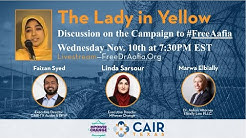





 the personal blog of Mateen Elass